
We also share information about your use of our site with our social media, advertising and analytics partners who may combine it with other information that you’ve provided to them or that they’ve collected from your use of their services.


Analysis of Medical Caster Installation
In the healthcare industry, the installation method of medical casters affects more than just maneuverability—it directly impacts the safety of both patients and medical staff. Whether it is a hospital bed, medical trolley, or diagnostic equipment, choosing the correct installation ensures the wheels remain stable, durable, and secure.
Haion Caster has been a leader in the medical and industrial caster fields for many years. Below, we provide a comprehensive guide to the four common installation methods for independent-brake medical casters and the equipment they best suit, helping you select the ideal solution for your needs.
Why Is the Correct Installation Method Critical?
Medical environments demand high mobility for everything from surgical tables to precision instruments. Improper installation can lead to:
- Equipment Wobbling: Affecting the precision of surgeries or diagnostic tests.
- Safety risk: Loose casters may detach, leading to equipment failure or patient injury.
Selecting the right Haion Caster interface based on the equipment structure is the first step toward improving medical quality.
Four Common Installation Methods for Medical Casters
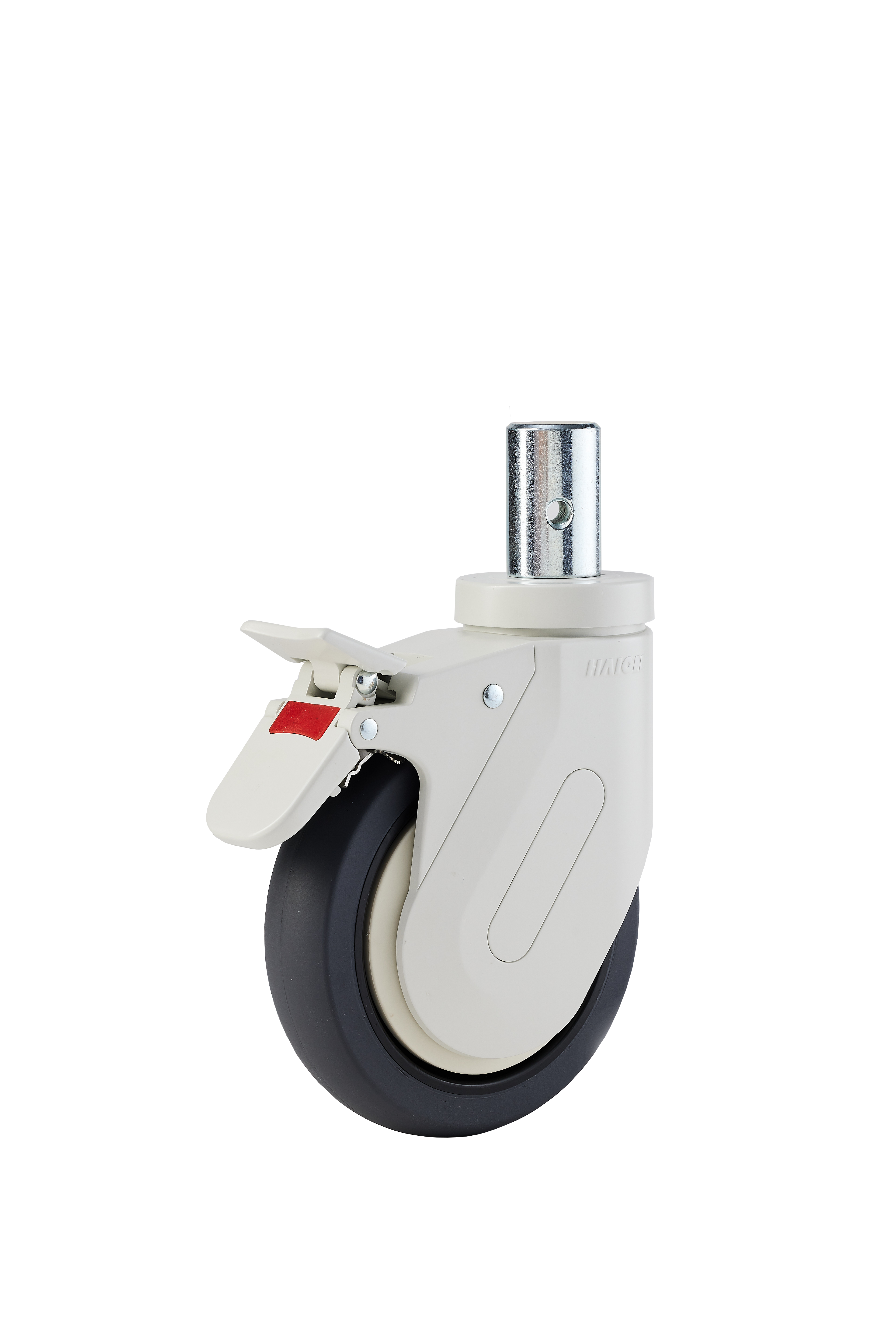
1.Solid Stem
The Solid Stem medical caster is one of the most common types. The top of the caster features a metal stem with a pre-drilled locking hole. A screw is passed through the equipment's frame and into the stem's hole to secure the installation.
- Key Features: Fast installation, robust structure.
- Best For: Medical trolleys, ward medical equipment.
Haion Caster's solid stem models undergo precision machining to ensure a tight fit that prevents loosening over time.
2. Plates (EU/US Standards)
Plate casters are secured via a flat metal plate with four bolts. This is one of the most stable installation methods available.
- EU Plate: Features diagonal bolt hole patterns.
- US Plate: Features parallel rectangular bolt hole patterns.
- Best For: Hospital beds, surgical carts, and heavy-duty medical equipment.
Plate mounts distribute weight evenly, and when paired with high-quality Haion medical casters, they significantly extend the lifespan of the equipment.
.jpg)
3. Threaded Stem (EU/US Standards)
A threaded stem caster uses a single bolt to screw directly into the base of the equipment. It is one of the most common mounting options.
- Thread Specifications: We offer EU threads and US threads.
- Hex Base Design: Haion Caster designs its threaded stem casters with a hexagonal base above the thread, allowing for easy tightening with an open-ended wrench.
- Best For: Small medical devices, lightweight carts, clinic furniture, and IV stands.
(1).jpg)
4. Bolt Hole Installation
Bolt hole casters utilize the hollow structure of the caster itself to be secured by a separate bolt or specialized expanding stems.
American Standard: Diameters are measured in inches (e.g., 1/2″).
European Standard: Diameters are measured in metric units (mm).
- Key Features: High flexibility; can be adapted with various mounting accessories to fit different tube diameters.
- Best For: Customized medical equipment and specialized diagnostic racks.
.jpg)
Why Choose Haion Caster for Your Medical Equipment?
- Expertise: Decades of experience in manufacturing premium medical casters.
- Versatility: A comprehensive range of installation interfaces to meet any global standard.
- Proven Quality: All wheels undergo rigorous testing for stability, noise reduction, and chemical resistance.
- Professional Consultation: We provide tailored advice to help you match the right caster to your specific device.
HAION CASTER INDUSTRIAL CO., LTD.
Head office : 9F-5, No.27, Lane 61, Sec.1 Kwangfu Rd., Sanchong Dist., New Taipei City, 241 Taiwan
Tel : +886-2-2999-8831
Fax : +886-2-2999-9131
Email : [email protected]
Get our newsletter
Subscribe


